Thursday, March 24, 2016

Chasing Atalanta (Chapter 4)

In the next morning, when I walked back and forth, carrying the cardboard boxes containing my books and clothes from Strummer to my room, Mom said, “Come with me to school.”

I was stupefied to hear what she just said.

“Huh?” I said.

Mom took her reading glasses off and stared at me with her piercing blue eyes that resembled mine, a sign that I was her son after all.

“Well, there are some files you need to read, this and that. Don’t worry about your teaching permit, though, because I’ve taken care of your emergency teaching permit. You can try to get the real thing next year, if you’re interested, but this emergency teaching permit will be sufficient as of now. And the whole school board can’t wait for you to teach. You know they all love you.”

I laughed mirthlessly. The school board wouldn’t mind me teaching, absolutely, because Mom could be persuasive to convince the other people if needed. And most of the school board members had known Mom longer than I did. Sometimes she just needed to wave her wand and everything would be done, just like magic.

 “It’s not like you have anything to do today.”

Way to go, Mom. She always had a reason to make me do everything she wanted, unable to reject anything she asked for.

“Yeah, whatever,” I mumbled, carrying my last box that contained my frivolous and unwanted plays that I had ever written, putting them in the attic, and letting dust and bookworm nibble them.

* * *

Rosefield High was less than 10-minute drive from my house, located in the eastern part of the town, near the border of Bursville, a township with a population of around 800. It didn’t only serve Rosefield and Bursville, but also three other townships around Rosefield, and there were 900 students attending the school, all with their tempestuous teenage hormones.

When I parked Mom’s car—she despised the idea of riding Strummer which, she said, smelled like a mixture of cigarette and alcohol. Sorry, Mom, I was never your golden boy—in faculty’s parking lot, I felt out of place. It wasn’t my first time being in faculty’s parking lot, actually. Back when I was in high school, Mom and Dad dropped Patricia and me in the same parking spot, looking exactly like an ideal American family. My mother had been a principal of the school as far as I could remember. She loved this school so much that she had delayed her retirement age over and over. And the faculty and school board members all had mutual feeling for her.

The school’s building was really uninspiring, to be honest. It was made of red bricks, really typical for an American high school building, which were arranged orderly until the second floor. Vines of ivies crawled to the roof. Its window trims and main entrance were painted white. Rose shrubs were planted around the building primeter, sometimes they grew really tall and reached the windows. The school’s front yard were a wide grassy area where school sign made of slate with ROSEFIELD HIGH SCHOOL—HOME OF THE WOLVES written on it. A pair of fir trees stood sturdily in the most front part of the yard, guarding the path leading to the main entrance, like two giant sentries. The spot beneath the trees was usually used as lunch spot for popular kids and their cliques back then. I used to spend my lunchtime there, another thing that I could rub in Phil’s face. The sports facilities, football field, and gym were all located in the behind of the students’ parking lot. For a school in small town like Rosefield, Rosefield High was actually kind of flashy.

I followed Mom, with her gray blazer and her high heels that made intimidating click-clacking sound, to her office in which I had already spent so much time, especially because I had to wait for her after school in my freshman year or because I had skipped Calculus class too often in my senior year.

A familiar face greeted me when I entered Mom’s office. Linda Johnson, our school’s secretary, a middle-aged black woman who had been Mom’s secretary long before I went to high school stood up, smiling from ear to ear, flashing her pearly white teeth. My mind flew back to James from Tim Hortons in Sylvania.

“Good morning, Mrs. Tucker,” said Mrs. Johnson. Mom replied in hum before disappearing to her room. “Patrick, it’s been a long time!”

She stepped out of her desk, approaching me. She tried hard to hug me, and I stooped so that she could reach and pat my shoulders.

“Hi, Mrs. J!” I grinned. She was my partner in crime when I must spend boring hours to wait for Mom after school, or when I must sneak in some girls from Twin Lake to Homecoming dance.

“Cut the crap, Patrick. You’re going to teach here, we’re in same level now. Just call me Linda. It’s really great to see you again here,” she said. Her face bloomed. “Look at you! Still as hot as ever.”

A sheepish grin escaped from my lips. Only Mrs. Johnson would only say ‘hot’ like teenagers. I guessed she had too much exposure to these juveniles.

“Well, you look hot as well, Mrs. J. You haven’t changed a bit,” I said.

She blushed then went back to her desk and I came in Mom’s room. Its decoration was still the same as the last time I went here in my senior. It had become my favorite hangout due to the amount of time I had spent here. Mrs. Hoffman, my Algebra and Calculus teacher, was my nemesis since freshman year because my gray matters wouldn’t work every time I faced nonsense numbers combined with words. She always compared me with Phil and said, “Phil always got a hundred percent in my class. I know you have the potential.” Feeling sick of the comparison, I decided not to care anymore and skipped most of her class during my senior. She didn’t hesitate to send me to Mom who gladly cut my allowance every time she saw my face in her office. By the time I finished high school, I only got ten bucks a week. She then lectured me about the importance of attending class and Calculus in real life. As if finding limit could help me find cure for AIDS. Luckily, Mrs. Hoffman was retired three years ago and she enjoyed her retirement with her husband in Bursville now. Mom told me this three Christmases ago and I remembered letting out a relief sigh.

Mom sat in her big swivel chair. Her blond hair—which she gave me to me, winning from Dad’s brown hair in gene pool—looked messy as her eyeballs moved frantically, looking for something from her drawers. She opened and closed the drawers, rummaging their contents, sometimes blurting out frustrated sigh.

I looked around Mom’s office. It was all in brown, including the carpet beneath my feet, except for a pot of schefflera in the corner of the room whose leaves were green. A wooden bookshelf stood on the opposite corner mostly containing dull books, such as school district’s rules or Michigan history. Plethora of framed certificates for Mom or this school were hung on the walls. Mom hung our family picture behind her back. It was taken ten years ago on my graduation day, when Dad was still as healthy as I could remember. It pierced my heart, though, to see she hung that picture as if she still believed that her husband was still fit and let other people who came to the office believe the same thing.

When Mom finally found what she had been searching, pile of paper towered in front of us and a briefcase lay on the table. Wearing her reading glasses, she read each paper briefly.

“This is this year’s handbook,” she said, handing me the briefcase and a thin book with gray wolf on its cover. I skimmed it and recalled my own handbook. There was no major change, except for the year. “This is the faculty and staff directory, and then this is state’s teaching guide and rule, Rosefield’s rule as well, and a copy of emergency teaching permit. There’s no name on it because it’s issued to the school, but in case you need it. This is the list of requirements to get provision certificate in Michigan if you want to teach permanently. Just ask if you need anything.”

I was overwhelmed with all these papers, trying to skim them one by one. Giving up, I slipped them hastily in the briefcase. She talked with so much fervor, as if I had decided to teach permanently here. To be honest I hadn’t given it a thought at all. I just knew I would teach for a year, to substitute Ms. Trayton who had to move to Florida. I had no idea what I was about to do beyond this year. If I didn’t want to do it, they probably would cancel Drama class. There was no Drama ten years ago until Ms. Trayton came five years ago.

“Jessica will give you her curriculum guide,” she said, resting her chin on her hands, her face beaming light, looking elated because her son finally had a stable job. “Want to look around with me?”

“Mom, I had lived in this school for four years. I don’t need your company,” I blurted, but she was as obstinate as ever. After closing and locking her drawers in, she stood up and pushed me out of her office. Mrs. Johnson winked at me.

Walking in the school hall where gray lockers stood on its either side gave me nostalgic feeling. Man, people said that high school was the best time of your life, and I wouldn’t deny it. Looking at the graduation banner that hadn’t been put down made my chest ache. I had such a great time in high school, spending all my success tokens, and now I ran out of them.

Few students who attended the summer school walked in the hall and looked at us amusingly. They probably wondered what an old man like me did in the school with the principal.

Mom took me to the faculty office which I had visited a few times. The air conditioner was set too cold, giving me chilling sensation. The TV was turned on, showing day-time soap opera. There were only four people in the room, all sat in the couch with red cup on their hands. They all gazed intently into the screen, including Mr. Bradbury.

A young woman whom I had never seen before finally took notice of us. She rose and came up to us. “Hi, Principal. Is it the famous Patrick?”

She had wavy brown hair and she wore a school-board-approved summer dress. She extended her hand, and I gave her a gentle handshake.

“Samantha Madison, but call me Sam. I’m teaching social studies. I’ve been teaching here for five years.”

“Patrick Tucker. Drama,” I replied, suddenly feeling so stupid.

“Hey, Tucker! Good to have you back here!” Mr. Bradbury shouted, lifting his red cup, as if he toasted to me. He glanced at Mom and said, “No, I’m not talking to you, Melissa.”

Mom smiled wryly and Mr. Bradbury stood up. He was a tall man, probably six-feet two, but now I had a good two inches on him. He had more wrinkles because he had read many stupid essays too often. He might be long in the tooth, but his enthusiasm was still there.

“What’s up, Mr. Bradbury?” I asked.

“I’m good, Tucker, very good,” he chuckled, nodding his head. “When Melissa said that you will teach here, I am really happy. Finally there’s someone who deserves to replace me.”

“Um, Sir, I only will teach Drama.”

“Yeah, that’s what you know,” he whispered.

Mrs. Tannous, my home economics teacher, also shook my hand. I had never taken her class before, but I’d seen her quite often. Mrs. Thomas, my Chemistry teacher, smiled at me. I’d never screwed up in her class, but I wasn’t someone who you called bright in Chemistry either, so each of us didn’t leave such an impression.

 “I thought Jessica would be here,” said Mom.

“Nah, I haven’t seen her all day. Have you tried her office?” replied Mr. Bradbury, filling his cup from water dispenser.

“Patrick and I just arrived,” Mom answered. “Edward, I need to talk to you. You know Jessica’s office, Pat? It’s in the auditorium’s back room.”

I almost said, “The room where people make out?”, but kept silent.

“Yeah, I know.” I shrugged then reached for the exit door, hearing Mr. Bradbury—who was also principal assistant—groaning as Mom told him something. “See you later, everyone.”

School auditorium was in the left wing of the building, near the English department, where medals and trophies were flaunted inside huge glass displays. Pictures of sports and choir teams from sixty years of this school’s age were hung in the auditorium’s wall like a necklace.

There was nobody when I stepped in the auditorium. The sound of my shoes hitting the varnished wooden floors echoed in the empty room, as if I had been the lone survivor of zombie apocalypse that took place outside there. I traced each pictures on the wall, trying to imagine how they felt when they won. Some were still in black and white. They looked ancient, but their smiles were timeless. I passed pictures from 1980s, 1990s, and 2000s until I reached my last three years of high school. I joined the varsity football team in my sophomore year, and Dad always stood among us in three pictures I had been on. In my senior year, wearing my jersey number twelve, I grinned widely and felt really proud. That’s when we were runner-up division in state championship. That was the best experience in my life, you know, standing in the middle of Ford Field, presumptuously feeling that nothing would get in my way, feeling I could conquer the world. Even if we just came in second place, that was our best placement since being champion in our division more than thirty years ago. Since then, we only played in state playoff—sometimes we even couldn’t get past local conference. Coming in second place was our best placement, and that’s why Dad looked so blithe on the picture, moreover when I was shortlisted as one of the best players in the division, hence I could get that sports scholarship. But, ten years had passed, my Friday night lights had been turned out, and life had moved on. Look at me now.

The room where people used to make out sneakily was located behind the stage, which was only used by choir team for their spring performance before Ms. Trayton came. I guessed the stage was now used to perform their drama as well.

There was no answer when I knocked the door. It looked empty.

Because I didn’t want to see Mom in her office, I decided to get out of auditorium and walked through the back door to football field. Training session usually began in August, so it was not surprising to see only three students running in the track encircling the field. I sat in the bleachers, gawking distantly at the green field, imagining Dad standing in the middle of the field, blowing his whistle, cursing each of us who drenched in sweat.

Ten years were such a long time, and no one knew what was going to happen in the next ten years. I mean if someone came up to me ten years ago and he said that Dad would spend most of his time in bed and would never be able to scream at us, I will tell him to fuck off.


A chime from my phone interrupted my woolgathering. It was from Mom who wanted me to take her to grocery store. Sighing, I rose up and walked to the parking lot. 

Review Thursday: The Hotelier - "Piano Player"

The Hotelier
Piano Player
Goodness
Tiny Records


The Hotelier's second album, Goodness, is probably one of my anticipated albums of the year. I really love their 2014's Home Like Noplace Is There which opens my mind that punk can be fun. And this year, this Massachusetts band comes back with Goodness, with "Piano Player" serves as the first single. 

You know what catches my attention the first is the album cover. The uncensored cover features a bunch of naked young old that makes you're very uncomfortable, but that's the point here because this band doesn't want to hide something, they want to be honest with their listener, and that's what they do with "Piano Player". 

They don't waste their time, starting the song with Frederick's fiery drum. But, the best part of "Piano Player" how Holden pens the song. It's like a fluid story, penned by a Pulitzer winner. Most of the album is inspired by Holden's experience as a camp counselor, where he met a girl who taught him a lullaby. Its influence is shown as he sings, "A kid half my age, baby's breath and meadow sage clutched in her hands like trophy game," The Hotelier's "Piano Player" once again convinces me that they're one of the best punk bands right now.  

Wednesday, March 23, 2016

Chasing Atalanta (Chapter 3)

Eventually, Mom had to cancel her dinner invitation because I just reached Muskegon at 7.30 pm, and there was still approximately an hour before I arrived in Rosefield. She sounded so peeved when I called her, but it absolutely wasn’t my mistake. Whose idea was it to invite strangers like that to a dinner when I, the most important and humiliated person on dinner, hadn’t even been there yet?  

The sun still shone, beaming its cadmium orange light when I drove in M-120, a Michigan road leading to Rosefield. There was always a stupid question that people asked every time I told them I came from Rosefield.

“Yeah, I’m from Rosefield.”

“Rosefield? It sounds really pretty. Is there any rose field there?”

“No,” I said briefly.

Rosefield’s folks, who apparently were also sick of hearing the same stupid question, finally decided to revamp Rosefield’s welcome sign. It said WELCOME TO ROSEFIELD—WHERE THERE’S NO ROSE FIELD HERE now.

There was no remote place in Michigan, but Rosefield was something you could be considered as “remote”. It was located on the edge of Manistee Forest, but I always wondered why many people came to this town—or city, officially, but I had been in New York for too long. Some of them were absolutely lost when they tried to reach a lodge or a famous tourist trap in Manistee, but some intentionally visited Rosefield. It made Rosefield a kind of bustling town. Not a big town, though, because a town was deemed big when it had Starbucks outlet built on it or something. Rosefield had none. There was only a coffee shop, if it could be deemed one. It was called Nancy’s, and it had better coffee than Starbucks, one of few things that I enjoyed from Rosefield. But with a population of 1,932, this town felt so crowded. Not as crowded as New York, of course, but it was because people in small town like Rosefield usually knew each other well. And consequently, we had to deal with nosy neighbors who minded other people’s business.

Another thing that I loved from Rosefield was its scenery. It was insanely breathtaking with evergreen forest surrounded the town and a lake—its water was crystal blue—blanketed some part of the town. It was so picturesque that I would not be surprised if Rosefield was used as a background for a silly and bullshit Tumblr quotes. You know, something like “Life isn’t easy for a those who dream” or “People cry, not because they’re weak. It’s because they’ve been strong for too long”. Those bullshits. The lake was called, surprise, Lake Rosefield, which was located at the border of the town and our house was built facing the lake. Small stream flowed from the lake and it connected to Manistee River, ending in Lake Michigan. A park with promenade was made on the side of the lake. I still remembered I often spent my evening there to read books for my English class. My English teacher, Mr. Bradbury, jokingly threatened us, “If you don’t read these books that I’ve asked you to read, I will come to your house and burn it down.” Only few barked a laugh, proving only a handful of students had read Fahrenheit 451. I laughed back then, even if I had to admit that was really not funny. I wondered if he was still teaching in Rosefield High.

When a row of maple trees and coniferous evergreen ran from the outside of windows, I lowered my window down, letting the summer redolence slap my nose. It smelled so sweet and fresh. These rows of trees were also a sign that I would arrive in Rosefield soon.

I bit the last piece of my polluted doughnut and turned up the volume of my CD player which now screamed Ty Segall’s rendition of “Fist Heart Mighty Dawn Dart”. I sang loudly with doughnut in my mouth, fully aware of my off-key singing, but I didn’t care. It was a nice summer day, and Strummer reflected the warm sunlight, looking glistened and happy—if a car were having any feeling. At the time, I didn’t care what Rosefield had in store for me.

* * *

The welcome sign of Rosefield stood firmly on the right side of the road. It was made of steel; the words were light green. An intricate picture of rose was painted circling its border, by a realism artist from Rosefield—who already had his fifteen minutes of fame for a few warhols back in Great Depression era in 1930s—an artist, named Michael Tripps, who didn’t even have his own Wikipedia page. His paintings could be worth thousand dollars back then, but I was unsure if anyone would want to buy it for a hundred dollars. He died when I was two.

The streets were empty when I passed the downtown area. The stores had closed already although the sun was still shining dimly. The neon streetlights had been turned on; their lights hit the sidewalk made of glinty flagstones, looking gleamy. Rosefield’s commercial district was all located in Ducher Street—all streets in Rosefield were named after varieties of roses. It stretched only two miles or so. Nancy’s was situated at the end of the street, on the corner between Ducher Street and Hermosa Street. From far, I could see its flashy neon sign, hurting my eyes. It was too eye-catching for something grim as this town. When I passed it by, its parking lot was jam-packed with vintage cars. In Rosefield, it was easier to find Impala 1967 than 2000s version of it, and that must say something, especially since Rosefield was in a same state with Detroit, where millions of newer Impala were produced each year. Rosefield’s nuance overall was like in 1960s, but without racism—I guess—and with more Wi-Fi signal covering the town like Black Death. On the opposite of Nancy’s was Joe Savory, my favorite diner where my football teammates and I used to celebrate our winning. One thing caught my attention. A new coffee shop—a real one, I mean, because Nancy’s technically was more like a diner as well—stood next to Joe Savory. It wasn’t there when I came last Christmas. If I recalled correctly, there was a candy shop beside Joe Savory, but now it was transformed into a hipster and pretentious coffee shop called Rosehill. So much for creativity. But, yeah, I’m in. I made a mental promise to myself to visit it when I had spare time; I had plenty of it, apparently.

I turned left to Hermosa Street where a row of similar single-family houses were built along the street. A group of boisterous teenagers sang the current number-one hit on Billboard Hot 100 with their guitar from my left side when I stopped at a stop sign. They lived “Young, Wild, and Free”, I quoted from Tumblr. Some of my friends used to live on this street, but I was extremely sure that none of them came back to Rosefield to work for their mother. I still kept in touch with my teammates, and no one was more pathetic than me even though it was only I and my giant linebacker, Ted Copeland, who got the sports scholarship. Ted, himself, was now a successful sports agent in Dallas.

It didn’t mean that I regretted my decision not to take the scholarship, but I swore to God playing football was fucking exhausting. And I didn’t want to spend my four years of college to get squashed by other men who had more pounds than me. I had thought of quitting football over and over, but after seeing Dad with his starry-eyed expression, feeling so proud of me, every time I scored a touchdown, I couldn’t do it. That’s the least that I could do to make him happy. But in the end, I quit football after high school. When I didn’t take the sports scholarship and ran away to New York, I felt like I had disappointed him, although I was fully aware that he was the one who supported me the most. On my junior year, Dad got a stroke. Until now, I lived in guilty because I felt I took part in Dad’s condition.

Hermosa Street led to two different places in Rosefield. If I turned left, I would reach a forest which was used as a running track for Rosefield High’s cross country athletes and sometimes our running track as well when Dad felt chaotic evil and commanded us to run across the forest. It was also a place where my soon-to-be Rosefield High students made love. If I turned right, I would reach Lake Rosefield, my home sweet home.

Lake Rosefield looked purplish as the sun began to set. Few people promenaded along the park, enjoying the lakeside view in the start of summer. A red-haired girl, sitting in her wheelchair, wheeled along the edge of the road; a woman who was probably her mother walked not too far behind. I looked away to the right side of my car where colonial houses were built facing the lake, some of them looked like they have stood since Salem Witch Trials era. This part of the town was one of the fanciest parts of the town, just because it faced the lake. Honestly I also wondered why Mom and Dad were able to purchase a house here, but as far as I could remember I had never moved from the house. Phil, four years older than me, also said the same thing, which meant that we had lived in the same house since a long time ago. However, as Mom once told us that her great grandfather took part in Klondike Gold Rush and migrated there, I was not surprised if Mom kept sacks of gold under her bed.

The front porch lights shone brightly when I parked Strummer behind Mom and Dad’s Highlander, when Dad was still able to drive. Mom suddenly appeared from the front door when I was rubbing my nasal bridge in the car, feeling tired and dizzy suddenly.

“Patrick!” I could hear Mom yelling from the outside, and after sucking tons of air, I opened the door.

She walked to me with her arms wide open, expecting my hug as if I had just come home after summer camp. I gave her a brief hug and she started to sniff me.

“Your aftershave smells really good,” she said and stopped hugging me because she now just started to squeeze a pinch of my nape hair. “But your hair can use some cut. You can’t teach with messy hair like that. Tired, Pat? I’ve made tuna casserole. Eat first before unloading your stuffs.”

I rolled my eyes like a teenage girl, but I obeyed my bossy mother and followed her when she dragged me to the house. I always loved how my Rosefield house smelled. It was a combination of wood floor and firewood stacking near the fireplace in living room, fresh pine from backyard, and old-people smell that bizarrely was pleasant. Mom’s laptop lay on couch. Ostensibly she was working on something when she heard a sound of car engine parking on the driveway.

“I want to see Dad first,” I muttered, leaving Mom alone in dining table. I slipped through the corridor leading to Mom and Dad’s room which was located in the back of the house, facing directly our backyard and small swimming pool.

A faint sound of TV was heard from the back of the door, and when I opened it, I found Dad sitting in his wheelchair. His gaze locked to the TV screen which showed a rerun of 60 Minutes played from DVR.

“Hi, Dad!”

He tried really hard to look at me and I could see his faint smile from his crooked lips. I knew he must want to run to me and punch me in the head and scream, “Hello, you son of a bitch”, but he would say it with his teary eyes, showing how much he missed me and how much I missed him. He didn’t have any knack for saying lovely things, but I knew he loved every one of us, but especially me. One thing that I could rub in Phil’s face was that I was Dad’s favorite son.

I sat beside him and held his hands.

“So, you know I will be back here to teach in Mom’s school.” His eyes looked at the face of Lara Logan, which was really attractive I had to admit, on the screen. I knew he must have huge crush on her.

He slightly nodded, trying his best to move his muscles that were still connected to his working nerve cells.

Dad stopped talking when he realized that he would only be able to produce gibberish sound out of his mouth. He only wanted to nod since then, and we could only communicate with using yes or no question. Dad must be feeling lonely, not being able to involve in two-way communication. He spent most of his time laying on the bed. Mom wheeled him along the side of the lake every evening. Every time I, or Phil, or Patricia came home, we took turn to accompany Dad to wheeling around Rosefield. Sometimes Mom took Dad to watch the football match if Rosefield High hosted it. One of few things that could entertain him.

Before it all happened, Dad was a handsome and austere coach. He was 200 lbs, all muscles, his voice was thunderous. We all used to be terrified of him, especially since he caught us smuggling booze inside the school bus when we had a match in Twin Lake in my sophomore year. He was furious, and we all had never seen the worse nightmare than his fury that night.

But it all changed seven years ago when Dad suddenly fell in his office in Rosefield High. One thing that I could remember since, there was no more austere man. His weight dwindled, I was not sure he weighed more than 100 lbs now. His brown hair used to be cut short, but now it all was gray. His wrinkles multiplied, like bacteria. His spirit dimmed.

“Had dinner yet, Dad?”

He just nodded.

“Well, then,” I said as I rose from my chair and rubbed Dad’s shoulders gently, “I wanna eat my dinner before Mom screams loudly from the dining table and I’m sure we both don’t want that happens.”

I left Dad and closed the door behind my back, before finally joining Mom in the dining table. She had prepared tuna casserole and chicken salad on a plate, all was ready to eat. I was sure that she had prepared all of this before she had to cancel the dinner invitation. I sat beside her and started to dig it.

“How’s the drive?” asked Mom, trying to kill the silence which was only filled with the clink of my fork and knife.

“Yeah, you know, really exhausting,” I answered. One of the few qualities that I liked from Mom was that she was a real virtuoso in kitchen. I hated to admit that sometimes I missed my mother’s dish.

“So, we’ll have dinner with Jessica Trayton tomorrow.”

“Who?” I asked.

“Jessica, our Drama teacher who must move to Florida. Have I told you before?”

“Probably, but I can’t remember.”

Mom sighed before continuing, “Yeah, I’ve invited her. And a junior student who takes Drama every year since freshman. She’s Jessica’s favorite, and I think it will be better if she meets you first. You know, to get acquainted or something.”

“Okay,” I replied, feeling unsure of what I should respond. I couldn’t wait to get acquainted with a teenager who was presumably obsessed with Drama. Yeah, sure.

“Great. I’ll get back to work then,” Mom got up from chair and walked back to the living room.

I shrugged and continued to finish my dinner while scrolling through Time news website, texting  Josh whom I still owed some money. From the deep of my heart, I expected some messages from Jennifer, but zilch. She never talked to me since she broke me up as if I had never been a part of her life.

When I finished my dinner and put the dish on the dishwasher, the tiring long journey finally took its toll on me. All of my fatigues suddenly came out of nowhere and I felt extremely tired. I yelled at Mom that I wanted to go sleep first.

My room was upstairs, and it all hadn’t changed since I left it last Christmas. It was all still messy with books and magazines dotting the bed and floor. Mom was reluctant to tidy my room up. Coat of dust blanketed my window trim and my desk and my Nirvana poster that I put on the wall when I was still in high school, back when being grunge was something cool. I still didn’t have a time to put it down.

After throwing some books from the bed, I lay down. It felt like heaven on earth before I let out a groan. I remembered that I must unload my stuffs from the car. Damn it. Screw it then, I would unload it tomorrow morning, but tonight I just wanted to hit the hay. Before I went into a deep slumber, I could hear my snore already. 

Tuesday, March 22, 2016

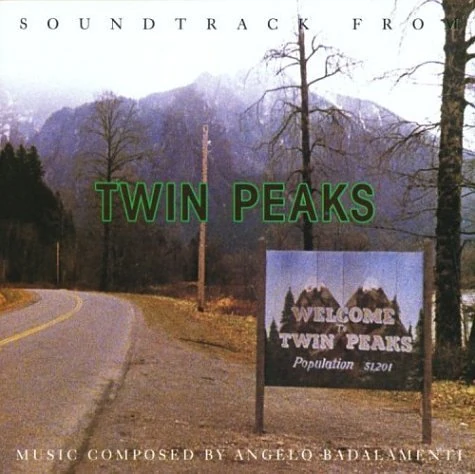
Hidden Track: Angelo Badalamenti - "Laura Palmer's Theme"

Angelo Badalamenti
"Laura Palmer's Theme"
Soundtrack From Twin Peaks
Warner Bros


The reason why I watch Twin Peaks at the first place is because of its soundtrack. I mean my friend had lauded and praised how great Twin Peaks was, but I didn't ever bat an eye to watch the series. However, one day, when I just listened to Deezer and utilized Flow feature--the feature that allows you to listen to infinite random songs and for me it's a great way to discover great stuffs out there. I couldn't remember what I was doing back then--probably I was writing 'Chasing Atalanta'--then Deezer played this song and suddenly there was an inconsolable sadness that crept up in me, and I had the urge not to cry. That's what's Badalementi's "Laura Palmer's Theme" able to do to you. 

Back in 1990-1991, when one of the greatest TV shows on earth, Twin Peaks, was on TV, it marked some major breakthrough at the time. Its sick, twisted, dark theme was a pioneer back then as we follow FBI Special Agent Dale Cooper who must resolve an uncanny murder of a young girl named Laura Palmer in a fictional town in Washington called Twin Peaks, a town that ostensibly hid something inside its woods. Created by David Lynch and Mark Frost, this show does not only have great script, characters, and acting, but it also has such an amazing score. It proves that TV shows also deserve great score that supports the show per se. 

"Laura Palmer's Theme", the highlight of Badalementi's Soundtrack From Twin Peaks--which won a Grammy Award for Best Pop Instrumental Album-- does not only successfully capture the dark theme of Twin Peaks, but also the mysterious and enigmatic nuance of the show. It starts with a heavy piano sound, and it gradually grows into an intense, heart-wrenching climax that makes you hold your tears because even if you haven't watched the series, you can still feel its grief, you can feel how a death of a young girl--I hope it's not a spoiler--can affect the whole town in sinuous way, how a death of a young girl finally unravels the dark side of the town. This almost-5-minute song may sound monotone with the same structure, but it's just a pure perfection, a moment of triumph in the scoring of TV shows, a proof that TV shows also deserve great score from best of the best. 

Hidden Track:
Hidden Track is a new feature in my blog which talks about an old song that I just recently discovered, or an old song that I don't enjoy, but I enjoy it a lot now, or an old song that's been overlooked that I enjoy. 


Tuesday, March 15, 2016

Review Tuesday: Frankie Cosmos - "On The Lips"

Frankie Cosmos
"On The Lips"
Next Thing
Bayonet Records

Frankie Cosmos' Greta Kline knows there's no point in making long song when you can manage to pour out your feeling in less than two minutes. And indeed, all of Frankie Cosmos' songs may only consist of around 1 minutes of string, drum, and Kline's pure voice, but all her songs are impactful. "On The Lips" is not an exception. 

It first appeared in im sorry im hi lets go, a collection of her songs released in 2013. Hence, she references this on the lyrics. They are followed by powerful lines of "Sometimes I cry cause I know I'll never have all the answers". She sings it plainly, but it's what makes the song impressive. She started the song by seeing David Blaine, the street magician, starting to believe in anything, asking the significance of kissing people, and crying by the end of the song.